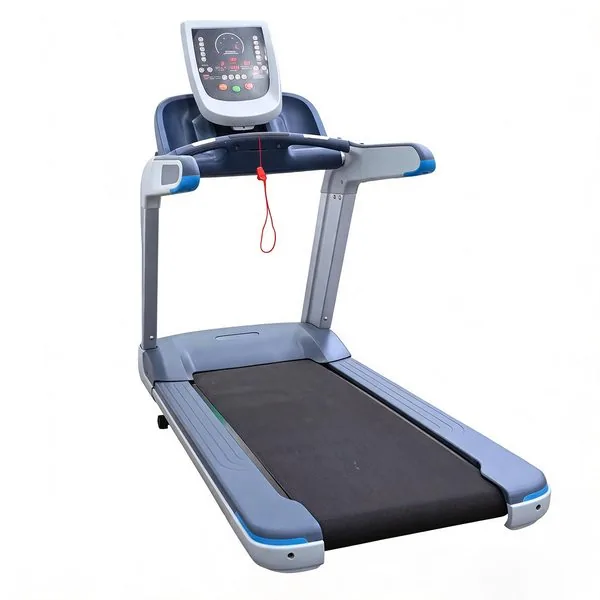
Almost every serious enquiry about commercial fitness equipment eventually reaches the same question, usually phrased carefully: "Is your product CE certified?" The honest answer is that CE is not a certificate a factory can hold in a frame. It is a declaration of conformity that the manufacturer makes, and the value of that declaration depends entirely on which standards were tested and by whom. For a buyer committing to a container load, understanding the difference between a real conformity file and a decorative PDF is worth more than a discount.
Why certification comes up before price
Equipment that fails a conformity check at the destination port does not get a second chance. It can be refused entry, held in customs, or — worse — released and then flagged after installation, when the buyer is already liable for it being in a public building. Insurance underwriters increasingly ask for conformity documentation before they will cover a commercial gym floor, and in the EU a fire officer or building inspector can request it during a routine visit.
That is why experienced buyers ask for conformity documentation in the same email as the quotation, not after the deposit has cleared.
The standards that actually apply
Fixed training equipment in Europe is governed by the EN ISO 20957 family, which replaced the older EN 957 series. The parts are split by product type, and a single machine usually needs one part from the general family plus one part specific to its category:
- EN ISO 20957-1 — General safety requirements and test methods. Applies to every machine and covers sharp edges, entrapment points, stability, static and dynamic load, and labelling.
- EN ISO 20957-2 — Strength training equipment. Covers selectorized stacks, plate-loaded stations and cable machines.
- EN ISO 20957-4 — Strength training benches. Covers flat, incline, decline and adjustable benches, plus the rack interfaces they are used with.
- EN ISO 20957-5 — Crank and pedal equipment, meaning exercise bikes with a fixed or free wheel drive.
- EN ISO 20957-6 — Treadmills, including motorised and manual versions, with requirements on belt speed control, emergency stop and handrail geometry.
- EN ISO 20957-7 — Rowing machines.
- EN ISO 20957-8 — Steppers and stair climbers.
- EN ISO 20957-9 — Elliptical trainers.
- EN ISO 20957-10 — Exercise bikes with a fixed wheel, which is the category indoor cycling bikes fall into.
A supplier who says "we are CE certified" without naming a part number is either simplifying heavily or does not know. Either way it is worth pressing. A legitimate conformity file will name the specific parts tested and the test laboratory that issued the report.
Class S, H and I — the letter that changes where you can sell
This is the part buyers most often miss, and it has direct commercial consequences. Every machine is classified by intended use environment:
| Class | Intended use | Typical buyer |
|---|---|---|
| S | Commercial studios and clubs, high use, unsupervised members | Gyms, hotel fitness centres, sports clubs |
| H | Home use, light duty | Residential buyers |
| I | Institutional use under supervision | Schools, clinics, rehabilitation, fire and police services |
A treadmill rated Class H is not illegal to sell, but it is not built for the duty cycle of a commercial floor. Put a home-rated machine in a gym with 300 members a day and the motor, belt and controller will fail in months, and the failure will be attributed to your brand, not to the rating. When comparing quotations where one price looks suspiciously low, this is frequently the reason.
Separately, equipment carries an accuracy class — A, B or C — which matters mainly for measuring machines such as body composition analysers, where Class A denotes laboratory-grade accuracy and Class C denotes basic indication.
Is a CE self-declaration enough?
For fixed training equipment, most products fall under the general product safety framework rather than machinery directive territory, which means self-declaration against harmonised standards is the normal route. This does not require a notified body. It requires the manufacturer to hold a technical file, run the tests, and issue a Declaration of Conformity signed by an authorised person.
Two things distinguish a working file from a paper one:
- A test report from a recognised laboratory, with the report number traceable and the tested model matched to the model you are buying. A report for a different frame and stack configuration is not evidence.
- A Declaration of Conformity that names the standards with full part numbers and revision years, identifies the manufacturer's legal entity, and is dated after the current revision of those standards.
Buyers with volume should ask for the test report itself, not the certificate of the report. A report can be checked against the laboratory's own verification system in a few minutes.
What changed for the EU in 2024: the Responsible Person
The General Product Safety Regulation, Regulation (EU) 2023/988, became fully applicable on 13 December 2024. It replaced the older General Product Safety Directive and introduced a requirement that matters directly to importers and to factories selling into the EU.
Every consumer product placed on the EU market now needs an economic operator established inside the EU who takes responsibility for the product — commonly called the Responsible Person. Their name, registered trade name, postal address and email must appear on the product or its packaging. For gym equipment this is a real cost line, not a formality: a factory without an EU entity needs either an importer willing to act as the Responsible Person, an authorised representative service, or a fulfilment partner.
Practically, this means a Chinese factory quoting CIF Rotterdam without any comment on the Responsible Person requirement is quoting an incomplete solution. Ask the question early, because the answer changes the landed cost.
The documents to request from any supplier
Rather than asking "do you have certificates", ask for a specific list. A supplier who can produce all six items quickly is organised; one who produces three and promises the rest is a risk.
- Declaration of Conformity naming the applicable EN ISO 20957 parts
- Third-party test report for the exact model, with laboratory name and report number
- ISO 9001 certificate with a valid expiry date and the certification body named
- Load test data for frames and weight stacks, including the safety factor used
- Electrical safety documentation for motorised equipment — CE plus, for the US market, UL or ETL listing on the power supply and controller
- A spare parts list with part numbers and recommended stock quantities
Certification outside the EU
Different markets, different paperwork. The UK now uses UKCA marking, which mirrors the EU framework but requires a UK-based responsible entity. The United States has no mandatory certification for strength equipment, but ASTM F2115 for treadmills and ASTM F2276 for strength machines are the standards insurers and large operators reference, and motorised equipment still needs a listed power system. Saudi Arabia requires SASO conformity through SABER, and Australia references the AS/NZS 4092 series.
If you sell into several markets, ask the factory which markets it already holds documentation for. Re-testing for a new market is a four to eight week exercise, and it is better to know before you sign than after the container has been booked.
Red flags worth walking away from
Three signals indicate that conformity is being treated as marketing rather than engineering. A certificate image with no report number and no laboratory contact. A Declaration of Conformity that lists standards by nickname rather than full part number and year. And a supplier who becomes irritated at being asked, rather than sending the file.
Certification will not make a mediocre machine good. But the absence of a real file tells you something specific about how the rest of the machine was built, and that is the part that ends up on your floor for the next decade.
If you are assembling a specification and want the conformity documentation for a particular model before committing, send us the model reference and destination market and we will return the applicable standards and available reports for that configuration.