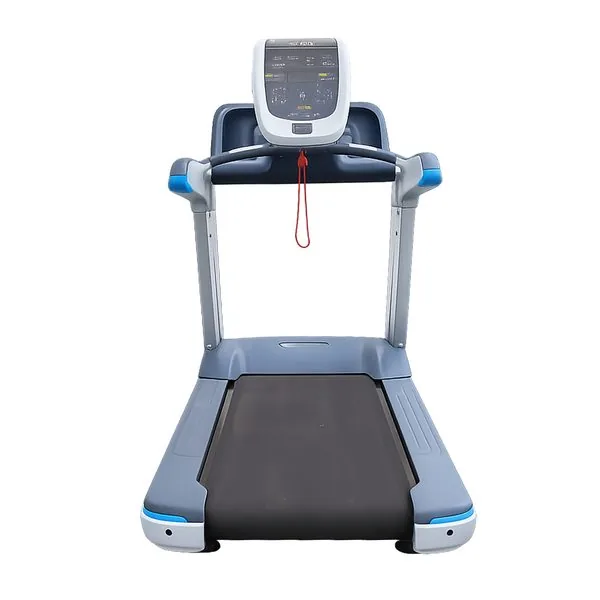
A treadmill quoted at one price FOB does not arrive at your warehouse for that price. By the time the container is unloaded, the gap between the two numbers is often large enough to turn a comfortable margin into a thin one. What surprises first-time importers is not the size of the gap but its composition: duty is rarely the biggest line. Freight, terminal handling, inland haulage and paperwork usually cost more than the tariff itself.
This is not a duty calculator, deliberately. Rates move, national measures change, and any number printed in an article becomes wrong eventually. What does not change is the structure: which heading the goods fall under, who is legally responsible for declaring it, which cost lines exist, and which questions get a straight answer from a customs broker. Get the structure right and the number is something you look up; get the structure wrong and the number is something you get fined over.
1. Unit price, FOB, CIF, landed: four different numbers
Suppliers quote FOB, because that is where their responsibility ends. The price includes the machine and getting it onto the vessel at Qingdao or Tianjin. Everything after that is yours. Some quote CIF, which adds ocean freight and insurance to the named port — a helpful convenience, and still not your cost.
Landed cost is what you actually pay per unit once the goods sit in your own warehouse, duty and tax paid. Comparing two suppliers on FOB price tells you which machine is cheaper. Comparing them on landed cost tells you which supplier is cheaper, which is the decision you are actually making. The difference is often decided by packing density and gross weight rather than by the machine: two treadmills with similar FOB prices can differ by several cubic metres of container space, and that gap lands in your freight bill, not theirs.
2. Where gym equipment lands in the tariff
Almost everything you buy falls into one place: Chapter 95, heading 9506, subheading 9506.91 — articles and equipment for general physical exercise, gymnastics, athletics and other sports. Treadmills, ellipticals, rowers, selectorized strength stations, plate-loaded machines, benches, racks, dumbbells, kettlebells and weight plates all sit in the same neighbourhood. They do not go into Chapter 84 as machinery, and they do not go into Chapter 85 just because they run on electricity.
That single fact resolves most arguments before they start. Classification follows the primary function of the article as presented, not its parts list and not its power source. A motorised treadmill is exercise equipment that happens to have a motor and a controller. It is not an electrical appliance that happens to make you run.
The console question
The equipment that triggers the most debate is cardio with a large touchscreen: treadmills with Android consoles, bikes with built-in screens, rowers with video training. Someone will eventually suggest splitting the machine — "the treadmill is 9506, the screen is a monitor, so declare the screen separately". Resist it. One article, imported as one unit, gets one classification, decided by what the whole thing is for. The console displays workout data and controls speed and incline; it is a component of an exercise machine, not a separate video apparatus. Where a machine genuinely becomes something else — a medical rehabilitation device sold on prescription, for example — that is a different conversation, and one to have with your broker and, if the value justifies it, with a binding ruling.
Where genuine disagreement exists
Being honest about the edge cases is more useful than pretending they do not exist. Recovery tools such as massage guns have been classified in more than one place depending on the market and the way the device is presented. Rubber gym flooring is not equipment at all: it is flooring, and it is classified as such. Spare parts shipped separately from the machine may follow the machine's heading or their own, depending on the part and the jurisdiction. None of these is a reason to avoid importing; each is a reason to describe the product accurately instead of copying a code from a competitor's invoice.
What a wrong code actually costs
Not the difference in duty, which is usually the smallest part. The real exposure is retrospective: an adjustment covering past entries, a penalty calculated on the underpayment, and storage or demurrage while the container waits for a decision — plus the credit you lose with a broker who now has to defend an entry you signed. In most jurisdictions that exposure sits with the importer of record, not with the exporter who suggested the code. This is the single most important sentence in this article.
3. Who is responsible for the code
Three parties, three different roles, and importers mix them up constantly.
| Party | What they give you | What they do not carry |
|---|---|---|
| Supplier / factory | Technical facts: material, function, power, whether it works standalone | Legal responsibility for the declared code |
| Customs broker / freight forwarder | The classification, the rate, the documentary checklist | The consequences of a false declaration, in most jurisdictions |
| Importer of record (you) | The signed declaration | — |
Practical consequence: ask your supplier for facts, not for a code. A product description sheet per model — composition, dimensions, gross weight, motor rating, function, whether it operates independently — is what a broker needs to classify correctly. A bare eight-digit number with no supporting description is an opinion, and opinions do not survive an audit.
4. Where to check the rate that applies today
Use the official databases, not blog posts. They are free, they are current, and they take ten minutes per product line.
- United States: the HTSUS at hts.usitc.gov. Read Chapter 95 down to the subheading and the statistical suffix — the suffix matters for reporting. Then check whether your subheading appears on a Section 301 action list. Those lists apply additional duty to goods of Chinese origin and are amended by action, so verify the current state rather than trusting an article written two years ago.
- European Union: TARIC, the official EU customs tariff database. It shows the third-country duty rate plus any measure attached to the code — anti-dumping, quotas, surveillance, suspensions. One code, one rate across member states.
- United Kingdom, Canada, Australia: each runs its own tariff finder and each has diverged from the EU text since Brexit and since various regional agreements. Do not assume an EU rate applies.
- Everywhere: search with the country of origin included, not just the code. The same subheading can carry different rates depending on where the goods were made, and a preferential rate requires a valid origin document — a certificate of origin that matches the consignment, not a scan of a generic one.
One detail worth raising with your broker: finished gym machines are seldom named in trade-remedy measures, but steel components and some accessories occasionally are. Ask directly whether any safeguard or anti-dumping measure touches your specific line. It is a two-minute question that occasionally saves a very expensive surprise.
5. The six lines that make up landed cost
Write these out once for your own market and reuse the model for every quotation. It converts supplier prices into a number you can actually compare.
| # | Line | What to verify |
|---|---|---|
| 1 | Goods value | The Incoterm you were quoted, and whether the price includes export packing |
| 2 | Freight and insurance | Charged on volume or weight; minimum charges; port or airport fees at both ends |
| 3 | Duty | Rate for that subheading, for that origin, checked today |
| 4 | Import VAT / GST | Recoverable for a registered business, but paid in cash at entry |
| 5 | Clearance and terminal handling | Broker fee, documentation, THC, inspection if selected |
| 6 | Inland delivery and compliance | Trucking, tail-lift or forklift, labelling, registration obligations |
The arithmetic, once you have filled in your own rates:
Landed = goods + freight + insurance + duty + import tax + clearance + inland + compliance
Two lines get underestimated more than the rest. Import tax is recoverable in most VAT and GST systems for a registered business — but you pay it at the border and reclaim it later, which means a genuine cash requirement for one to three months depending on your filing cycle. On a container of strength machines that is not a rounding error. Plan the working capital, not just the margin.
Compliance is the line that gets missed entirely, because it is not a customs requirement and does not appear on a broker's invoice. Depending on your market it can include electrical safety documentation, translated manuals and warning labels, energy or ecodesign information where applicable, and packaging extended producer responsibility registration. That last one catches a surprising number of importers: it is an environmental obligation, it is registered in the market you sell into, and it has nothing to do with your customs entry. Ask before the goods ship, not after they are on the water.
6. Documents, and why a missing sheet costs more than duty
The usual set: commercial invoice showing description, origin, Incoterm and unit price; packing list with gross weight and crate dimensions per item; bill of lading or airway bill; certificate of origin if you are claiming preference; your importer number and bond in the US, or an EORI number in the EU; product specifications and manuals. For some product categories a declaration of conformity is required on top of that.
Missing one document does not delay the shipment by an hour. The container sits at the terminal, and terminal storage accrues per day, per container. On a forty-foot container the daily figure is uncomfortable; over a week it can exceed the duty you were arguing about. This is why the boring line — packing list with real dimensions — is worth more than it looks: it feeds the freight quote, the load plan and the customs entry at the same time.
7. Three sentences from a supplier that should make you check
"This product is duty free." It may be true, for the code quoted, in one market, on one date. Ask which subheading, which destination, and which source. This is not distrust; a rate is a moving object and your supplier is not the body that publishes it.
"We declare it as samples." Under-declaration of value or misdescription of purpose is the importer's exposure, not the exporter's. A lower entry figure saves duty today and creates a liability that does not expire quickly.
"We will split the shipment to stay under the threshold." Deliberate splitting to avoid duty is a violation, not an optimisation. Consolidating several small orders is normal and useful; structuring them to defeat a threshold is a different act with a different name.
8. Eight questions for your customs broker, before the first container
- Which subheading will you use for each model on my list, and what is the reasoning?
- Does any additional duty apply based on country of origin for these subheadings?
- Is any anti-dumping or safeguard measure applicable to the steel content or accessories?
- What total duty and import tax will I pay at entry on this invoice value?
- Which documents do you need, in what form, and by when?
- What are the terminal and handling charges at this port for this volume?
- Do I need an EORI or importer number before arrival, and how long does registration take?
- If the classification is challenged later, who represents me and what does that cost?
Eight answers, one email, before you place the order. Every one of them changes a number in your landed cost model.
9. What a supplier can legitimately give you
A manufacturer cannot tell you what you will pay at your border, and should not pretend to. What a good one gives you is the input a broker needs: a spec sheet per model with material, dimensions, gross weight and power rating; a packing list with actual crate dimensions; a consistent classification suggestion with the reasoning behind it; and a plain statement that the final classification and rate rest with your broker. If you are claiming preferential origin, the supplier is also the party who obtains the certificate of origin — so ask early, because that document cannot be created retroactively in every market.
Related reading: commercial vs semi-commercial vs home treadmills · FOB, FCL and LCL shipping from China · the 10-point factory audit checklist.
Send us your equipment list, destination port and target market. Within 24 hours you will have model-level specifications, packing data with gross weights, and a classification suggestion per model that you can hand straight to your broker for confirmation — plus a quotation that separates product, packing and Incoterm so the numbers stack up in your own model.