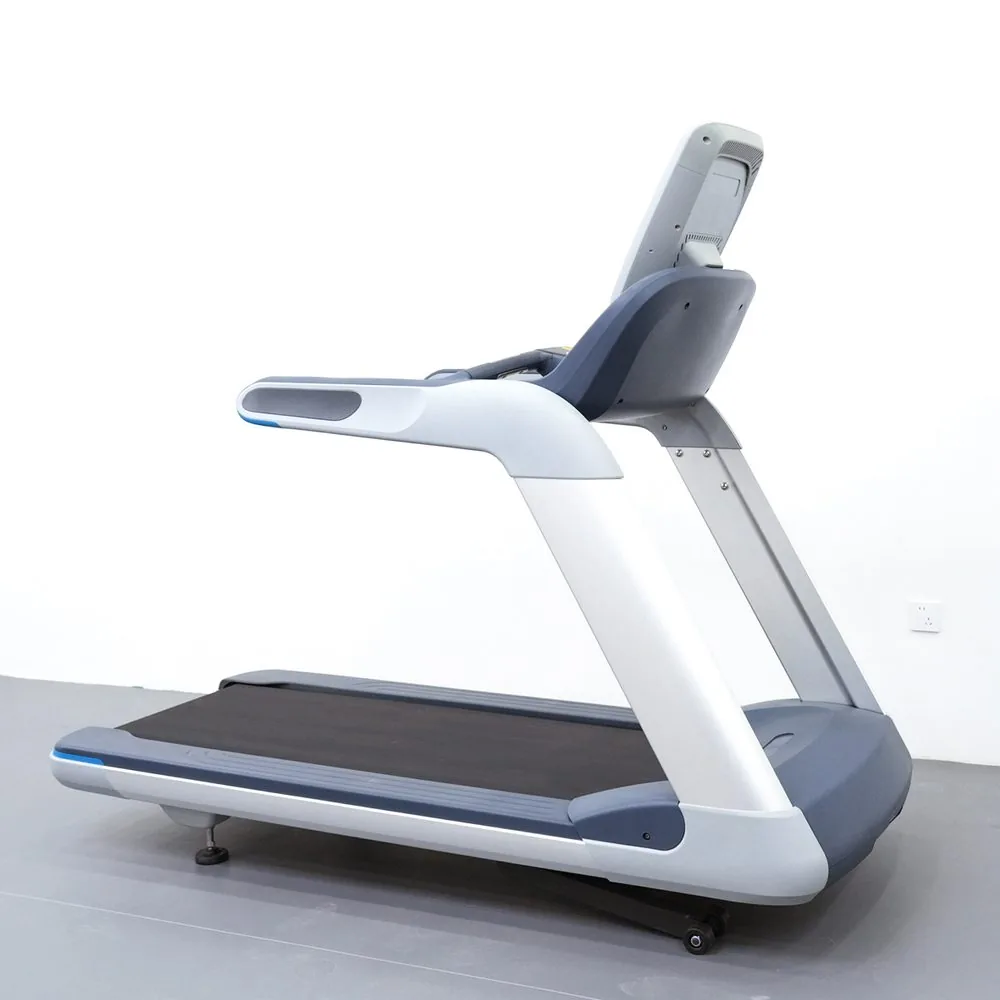
Almost every quotation carries one line that looks reassuring: a warranty term stated plainly in the summary box, with not a word about which parts it covers. It reads like a single promise covering a machine. In practice it is a shorthand for four or five separate promises with different lengths, different owners and a long list of conditions — and the buyer usually discovers which one applies at the worst possible moment, standing on a gym floor with a dead treadmill and a technician's invoice.
This is not a warning about dishonest suppliers. Tiered warranties are the industry norm, and they exist for a defensible reason: a welded frame and a treadmill belt do not fail on the same schedule, so promising the same term for both would either overprice the frame or bankrupt the parts budget. The problem is not the structure. The problem is that buyers read the single word and assume the strongest tier.
Below is how to dismantle that word into the things it actually contains, the four exclusions that quietly undo most claims, and the questions that turn a marketing line into a document you can hold a supplier to.
1. One word, five separate commitments
When you ask a supplier to break a warranty down, the answer almost always separates along these lines. Use this table as the shape of the document you should be asking for.
| Tier | What it covers | What typically fails here | Who usually bears it |
|---|---|---|---|
| Structure | Frame tubes, weldments, base, main uprights | Almost nothing — this is the tier that rarely gets used | Supplier, longest term of the five |
| Drive | Motor, inverter or control board, rollers, belts and cables | Control boards, drive belts, cable stretch | Split: part from supplier, labour often from you |
| Mechanical | Pulleys, bearings, guide rods, weight stacks, adjustment pins | Bearings, cable ends, selector pins, bushing wear | Supplier for the part; fitting is negotiable |
| Wear and cosmetic | Upholstery, grips, pedals, overlays, treadmill deck and running belt | Upholstery seams, grip hardening, deck wear | Usually the buyer — these are consumables by design |
| Labour and freight | The technician, the callout, the return shipment | The most common source of dispute, by a wide margin | Whoever the contract says — often nobody has written it down |
The important column is the last one. A warranty is not really about how long a promise lasts; it is about who absorbs the cost when the promise is called in. A generous parts commitment with no labour clause can cost a gym more than a shorter commitment that includes fitting, because the part is rarely the expensive half of a repair on a remote site.
2. Why the tiers run counter to how machines actually fail
Look at the order of the tiers again. The component least likely to fail — the frame — usually carries the longest term, and the components that fail most often carry the shortest. That looks backwards to a first-time buyer, and it is worth understanding why.
A frame is a static structure. If it was welded on a proper jig, from tube of the specified wall thickness, and it survived the first months of loaded use, it will very likely survive the rest. Offering a long term on it is cheap because the claim rate is close to zero. A running belt, a cable, a seat pad and a control board are all in motion or in contact with sweat, chalk and body weight; their failure is a question of when, not whether. Pricing those at the frame's term would mean pricing the machine significantly higher to fund a claims pool the buyer would rather not prepay.
The practical consequence: the term on the frame tells you almost nothing about the machine's real cost of ownership. The numbers that predict your next four years are the terms and conditions on the drive, mechanical and wear tiers — plus whether labour is inside or outside the promise.
3. The four exclusions that undo most claims
Every warranty has conditions, and most of them are reasonable. The difficulty is that they are usually written in one dense paragraph near the bottom, in a form that reads like boilerplate until the day it is applied to you. These four account for the majority of disputes we see.
Duty class mismatch. Equipment sold for home or light-institutional use, then installed in a commercial facility, is the single most common ground for refusing a claim — and the refusal is usually legitimate under the terms. The specification should state a duty rating (hours per day, and at what user profile), and the installation should match it. If a supplier cannot tell you the duty rating in writing, that ambiguity will be resolved against you later, not in your favour.
Environment. Coastal air, unheated rooms, humidity above the equipment's stated tolerance, unstable mains voltage and ungrounded outlets are all standard exclusions. In the Gulf, in coastal Latin America and in any basement gym, this clause matters more than the term itself. The workable approach is not to demand that the clause be deleted — no manufacturer will — but to ask what the specified operating envelope actually is, and then check your room against it before delivery rather than after a failure.
Maintenance records. Deck lubrication, belt tension and tracking, cable inspection, bolt torque checks: the warranty typically assumes these were done at the stated intervals. A facility with no maintenance log is, in the supplier's reading, a facility that voided its own claim. Ask for the maintenance schedule as a document at order time, and keep it filled in. This costs nothing and converts a disputed claim into a routine one.
Installation by an unqualified party. Many terms make coverage conditional on assembly by the factory team or an approved installer. If you plan to self-install, get that in writing before the order — ideally with the specific requirement stated (for example, that a factory engineer supervises commissioning, or that assembly follows the supplied manual with a signed checklist). Silence here is read one way when you buy and the other way when you claim.
4. Who actually performs the repair
A warranty is only as useful as the distance between the broken machine and the person who will fix it. Three support models are common, and they behave very differently in year two.
- Factory-direct, parts by courier. The factory ships the part; you or your technician fits it. Works well for mechanically capable operators, and the cost is predictable — but every failure costs you labour and downtime.
- Regional distributor with local stock. The best outcome when it exists, because the parts are in the country and a technician is reachable. Ask which parts are actually held locally, not which parts could be ordered.
- No local support. The machine is effectively unserviced after delivery. This is acceptable only for low-duty facilities where a few weeks of downtime is survivable, and only if you hold a spares kit yourself.
For any of the three, establish four mechanics of the claim before you order: what evidence is required (photographs, video, serial number, batch code), what the response time commitment is, who pays the outbound freight on a replacement part, and who pays the import duty when that part crosses a border a second time. That last one surprises buyers regularly — a free replacement part can still arrive with a customs charge attached.
5. Turn the sentence into a document
The goal is not a better adjective. It is a schedule you can attach to the purchase contract and point at later. Four items are worth insisting on:
- A warranty schedule by tier — one row per tier, with coverage, term, exclusions and the responsible party named. One page is enough. A supplier who cannot produce one page has not thought about the subject.
- A spare parts list with part numbers — for the consumables specifically: belts, cables, bearings, pads, boards. Part numbers are what make a part orderable in eighteen months, when the salesperson you dealt with has moved on.
- A maintenance schedule — intervals, consumables and the checks that keep coverage valid.
- A language clause — state which language version governs. On a four-language transaction, the version that governs is the one that will be quoted back to you in a dispute.
6. Five questions to send before you sign
- Please send the warranty as a table by tier — structure, drive, mechanical, wear, labour — with the term and the exclusions for each.
- Is labour included, and if so for which tiers and under what conditions?
- What is the duty rating in hours per day, and does the specification change if the machine is installed in a commercial facility?
- What evidence do you require for a claim, and what is the committed response time?
- Which consumable parts should be in the first container, and what are their part numbers?
None of these questions is adversarial, and a well-run factory answers all five within a day. The answers are also the fastest way to tell two quotations apart: two machines at similar prices with different labour terms are not the same offer, and the difference does not show up until something breaks.
Related reading: installation, spare parts and after-sales: what to agree before the container ships · the 10-point factory audit checklist before your deposit · how to read a commercial treadmill spec sheet.
Send us the models you are considering and the facility type — commercial floor, hotel gym, studio or home — and we will return the warranty schedule for each model in the table format above, together with the consumable parts list and their part numbers, so the terms can be compared against any other offer line by line.