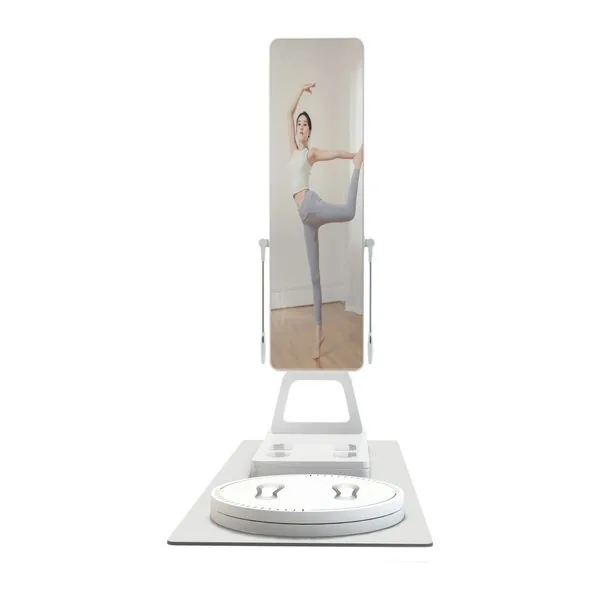
A member steps onto the platform, holds the handles for under two minutes, and walks away with a printed report showing fat mass, muscle distribution, body water and metabolic rate. From the operator's side it looks like magic. It is not — it is bioelectrical impedance analysis, a measurement method that has quietly become the default body assessment technology in commercial gyms, weight-management studios and rehabilitation clinics worldwide.
This article explains what actually happens between stepping on and reading the report: how a body composition analyzer measures the body, what a BIA scan can and cannot tell you, where its accuracy limits sit, and which specifications matter when you are choosing one for your facility.
1. What a body composition analyzer actually measures
Body weight alone cannot distinguish between losing fat and losing muscle, and that distinction is exactly what keeps members training. A professional BIA analyzer splits body mass into its components and reports them as separate numbers:
- Body fat mass — total fat, usually broken down into subcutaneous and visceral fat estimates.
- Skeletal muscle mass — often reported per limb and for the trunk, which reveals imbalances a total number hides.
- Body water — extracellular water (ECW) and intracellular water (ICW), with the ECW ratio serving as a water-balance indicator.
- Protein and mineral content — derived estimates that reflect nutritional status and bone mineral.
- Basal metabolic rate — the calorie baseline used to set nutrition targets.
A full commercial report typically covers 21 or more items. On top of the composition numbers, some machines add body measurement (girths and balances) and posture assessment, which turns the device from a measuring tool into a screening station a club can charge for.
2. The BIA principle: resistance, reactance and frequency
Bioelectrical impedance analysis rests on a simple physical fact: lean tissue, which is rich in water and electrolytes, conducts electrical current well; fat resists it. A bioelectrical impedance machine therefore passes a safe, imperceptible low-level alternating current through the body and measures two things:
- Resistance (R): how much the body opposes the current. More water and muscle means lower resistance; more fat means higher resistance.
- Reactance (Xc): how cell membranes briefly store and release the current, which reflects cellular health and integrity.
Frequency is what separates a consumer scale from a professional unit. At a single 50 kHz frequency, the current partially bypasses the cells and mostly reads the water between them, so the estimate blurs under hydration changes. Multi-frequency bioelectrical impedance test protocols — for example the 5 / 20 / 50 / 100 / 250 kHz range used in the Fittalon TL880 — send currents at several depths: low frequencies read extracellular water, high frequencies penetrate cell membranes and read total body water. Comparing the two is what allows a BIA machine to separate muscle water from fat estimates with far better stability across a real, hydrated, coffee-drinking population.
3. From raw impedance to body composition numbers
Raw impedance values are not yet body composition. The analyzer combines them with the member's height, weight, age and sex, and applies regression algorithms to convert impedance into tissue estimates. The contact configuration matters here:
- Foot-to-foot (2 electrodes): current covers only the legs, so the trunk — where most fat and muscle live — is extrapolated. This is the consumer body composition scale.
- Hand-to-foot (4 electrodes): covers more of the body but still cannot split limbs from trunk.
- 8-point segmental contact (hands and feet): each limb and the trunk are measured separately, which is what makes left-right symmetry and segmental muscle balance reporting possible.
This is also why test consistency rules exist: same time of day, normal hydration, no exercise or alcohol immediately before, bare feet on the electrodes, arms slightly away from the torso. BIA responds to the body's real state — that is its strength — so the protocol protects the trend line your coaches will rely on.
4. What a BIA scan report shows
A standard commercial BIA scan report is built around three layers:
- Totals: weight, skeletal muscle mass, body fat mass and percentage, body water, protein, minerals, visceral fat level and basal metabolic rate.
- Segmental analysis: muscle and fat for each arm, each leg and the trunk, usually visualized as bars against a reference range. This is the section personal trainers use most, because a strong-but-imbalanced member shows up immediately.
- Interpretation: body type classification, target suggestions, and where relevant a fitness or health score.
Reporting output separates serious machines from toys. Check that the unit you are buying supports A4 printing, mobile viewing, email delivery and a management backend — members keep printed reports, coaches need the backend, and a gym chain needs both to compare locations.
5. How accurate is bioelectrical impedance analysis?
The honest answer has two halves. For tracking change over time under a consistent protocol, professional multi-frequency BIA is highly repeatable — which is precisely what a coaching programme needs. For absolute values, every field method has limits, and BIA is no exception:
- Hydration shifts the reading: a dehydrated member will read higher in fat percentage than the same member after normal fluid intake.
- Food, alcohol and intense training before a test distort water distribution and should be avoided for a few hours.
- Population-specific algorithms matter: athletes, elderly members and pregnant members need appropriate settings to avoid biased estimates.
DEXA remains the laboratory reference for research-grade absolute values, but it is impractical to run a member journey on it. The practical position, and the one we advise buyers to communicate to members: BIA numbers are a precise, repeatable management tool; the trend is the truth, not any single reading.
6. Advantages and disadvantages to tell your members
Advantages: the test takes about two minutes, involves no radiation, requires no operator licence, costs the facility nothing per test after purchase, and produces numbers members immediately understand. Segmental readings and posture assessment add services a club can charge for.
Limitations: readings respond to hydration, so the protocol above is mandatory; single-frequency consumer devices are notably less stable; and results should be read as fitness management data, not medical diagnosis. A gym that states this openly earns more trust than one that oversells the technology.
7. Which specs matter when you buy
Strip the brochures down to five decisions:
- Frequency range: multi-frequency (ideally at least three, better five) versus single 50 kHz. This is the single biggest stability factor.
- Electrode configuration: 8-point segmental contact if you want limb-by-limb reporting; otherwise you are buying an expensive scale.
- Report ecosystem: print, mobile, email and backend management decide whether the machine feeds your retention workflow or just prints paper.
- Assessment extras: body measurement and posture screening turn the analyzer into a chargeable screening service.
- Throughput and footprint: rotating platforms and integrated design speed up peak-hour queues; check the machine's dimensions against your floor plan first.
Our TL880 and TL870 analyzers follow exactly this logic: multi-frequency 8-point measurement, 21-item reports, cloud management and — on the TL880 — a 360° rotating platform with 3D posture capture for facilities that sell screening as a service.
8. The short answer
A body composition analyzer works by sending safe multi-frequency currents through the body, reading how water-rich lean tissue and fat-resistive tissue respond differently, and converting that impedance profile — together with height, weight, age and sex — into a segmented fat, muscle and water report. Run on a professional 8-point machine with a consistent protocol, it is the most practical body data tool a commercial gym can put on its floor.
If you are evaluating machines for your facility, compare the TL880 and TL870 body composition analyzers side by side, or send us your requirements for a specification-matched quotation.